
Super Visa
How to Prepare a Super Visa Application for Your Parent or Grandparent
Prepare a Super Visa application with clear checks for eligibility, MNI, documents, insurance, invitation letters, final review, and refusals.
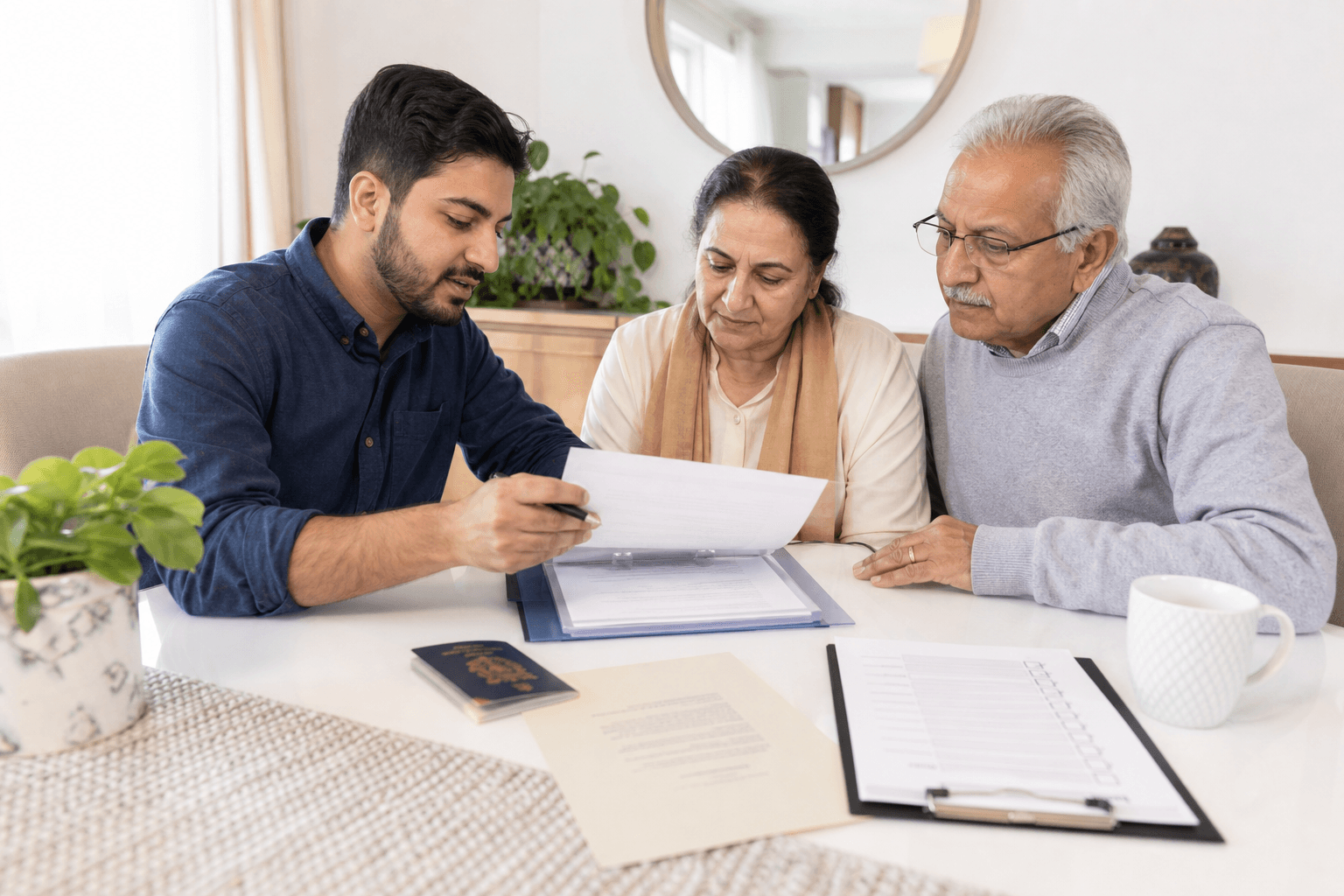
Super Visa application preparation is more than collecting a passport and invitation letter. A strong application connects the parent or grandparent’s evidence with the Canadian host’s status, household income, relationship documents, insurance and IRCC’s personalized checklist.
Start with eligibility and the household income calculation before completing every form or purchasing insurance. Then organize the evidence, compare names and dates across the package, and pause whenever a document is missing, unclear or contradictory.
Step 1: Confirm the host and applicant are eligible
Under the current ministerial instructions, the host must be the applicant’s child or grandchild, be at least 18, reside in Canada and be a Canadian citizen, permanent resident or registered Indian. The host must also meet or exceed the applicable MNI.
The applicant must be the host’s parent or grandparent. Verify the relationship with civil documents before building the rest of the package. If the relationship, host status or Canadian residence is unclear, stop and resolve that issue first.
Step 2: Map the family relationship and household size

Create a household list before assessing income. Include the people counted under the current rules, which may include the host, spouse or common-law partner, dependent children and the visiting parent or grandparent, depending on the family’s circumstances.
An eligible spouse or common-law partner may be able to co-sign and contribute income evidence where current IRCC rules allow it. Do not assume another relative can co-sign. Record each person counted, their relationship to the host and the evidence supporting their inclusion.
Step 3: Check MNI, LICO terminology and income evidence
Families often search for Super Visa income requirements using the term Low Income Cut-Off (LICO). The practical checkpoint is whether the host meets the current Minimum Necessary Income requirement for the correctly calculated household size.
| Record | What to verify |
|---|---|
| Household members | Everyone included in the calculation and their relationship to the host |
| Income sources | Employment, self-employment or other income shown by suitable evidence |
| Supporting records | Tax, employment and other documents requested by the checklist |
| Co-signer | Whether an eligible spouse or common-law partner can contribute evidence |
| Gaps | Missing, outdated, inconsistent or difficult-to-explain figures |
The invitation must include a promise of financial support and list the people included in the income calculation. IRCC also requires proof that the host meets or exceeds the MNI. If the result changes depending on who is counted, pause and verify the calculation.
Step 4: Build the personalized document checklist
Use a planning list to organize your work, but do not replace IRCC’s personalized checklist. After the questionnaire is completed, IRCC provides a checklist based on the applicant’s answers and circumstances. Review the official Super Visa application process before preparing the final package.
- Applicant: passport, forms, photograph and identity documents.
- Host: proof of Canadian status and residence in Canada.
- Relationship: civil records proving the parent or grandparent relationship.
- Financial: MNI evidence for every person included in the calculation.
- Invitation: a signed letter consistent with the application and financial records.
- Insurance: proof of qualifying Super Visa medical insurance.
- Purpose and circumstances: documents requested to explain the visit.
- Conditional items: medical examination, biometrics or other requested documents.
Step 5: Prepare an invitation letter that matches the evidence
A Super Visa invitation letter should identify the host and applicant, explain the relationship and purpose of the visit, describe the host’s financial-support commitment and list the people included in the income calculation. It should be signed by the host child or grandchild.
Compare the letter with the forms and attachments before signing. Names should match passports and civil records. Addresses, dates, family composition, income figures and the proposed visit should not conflict. IRCC states that the letter must be supported by proof that the host meets or exceeds the MNI.
Step 6: Arrange medical insurance, examinations and biometrics
Medical insurance is a central Super Visa requirement. Select a policy that meets current program rules and retain the documents proving compliance. Check the applicant’s name, dates, coverage terms, insurer information and any conditions that could affect acceptance.
Medical examinations and biometrics must follow the instructions for the particular application. Do not assume every applicant receives identical requests or that an examination from another immigration matter automatically satisfies the current process.
Families comparing temporary visitor pathways can also review visitor visa considerations. The suitable option depends on the proposed visit and the family’s circumstances.
Step 7: Complete forms and prepare readable uploads
Use current IRCC forms and instructions rather than an old saved version. The IRCC forms and instructions portal identifies the relevant application package.
- Scan every page clearly without cut-off text.
- Check names, dates, document numbers and signatures.
- Follow the portal’s file type and size requirements.
- Provide translations and supporting documents where required.
- Use descriptive file names.
- Confirm every answer matches the passport, invitation and evidence.
Step 8: Run a final evidence and consistency review
Compare every form and attachment for the applicant’s name, birth date, passport details, address, relationship, travel purpose and family members. Then compare the financial evidence with the household worksheet and invitation letter.
Stop before submission if a document is missing, illegible, contradictory, unsupported or impossible to explain. Resolve the issue or provide the clarification required by the current instructions. A quick submission is not a substitute for an understandable package.
Step 9: Submit through IRCC and retain the record
Follow the personalized portal instructions to upload documents and pay required fees through the official process. Keep copies of the forms, uploads, invitation letter, insurance records and payment confirmation.
Monitor the account for requests and respond by the stated deadline. Do not rely on an unverified processing estimate or assume submission means approval.
Where Super Visa preparation commonly breaks down
Common problems include missing documents, unreadable uploads, inconsistent names or dates, unclear relationship evidence, unsupported income and an invitation letter that does not match the application. These issues can make the family’s circumstances difficult to assess.
A refusal should be treated as an evidence review, not an instruction to repeat the same package. Read the refusal reasons, connect each concern to the submitted evidence and determine what has changed before considering a Super Visa reapplication after refusal.
When structured application preparation may help
Professional support may help when eligibility is uncertain, household income is complicated, insurance documents are difficult to assess, evidence is hard to assemble or the applicant has received a refusal.
Simmi Immigration provides eligibility assessment, MNI and income documentation support, insurance compliance review, invitation letter guidance, document checklist preparation, application assembly, submission and follow-up support, and refusal review. These services cannot guarantee approval.
Frequently asked questions
Does the IRCC personalized checklist include every document my family should prepare?
It identifies documents based on the questionnaire answers. You should still organize the package logically and ensure the evidence is clear, consistent and sufficient to explain the family’s circumstances.
Can my spouse or common-law partner contribute income?
An eligible spouse or common-law partner may be able to co-sign and contribute income evidence where current IRCC rules permit it. Confirm eligibility and list everyone included in the calculation.
What should I do after a refusal?
Review the refusal reasons and connect each concern to the submitted evidence. A new application should address the concerns rather than repeat the same package.
Does qualifying insurance guarantee approval?
No. Insurance is only one part of the application. The host and applicant must also satisfy the applicable requirements and provide a complete, credible and consistent package.
Conclusion: Prepare the evidence before you submit
Start with eligibility and household income, then prepare relationship documents, the invitation letter, insurance, forms and readable uploads. A final consistency review is essential because a complete-looking package can still contain conflicting details.
If you need help with eligibility, income documentation, insurance compliance or a previous refusal, Simmi Immigration offers Super Visa preparation and refusal review support, including a free assessment and a typical response within one business day.