
Super Visa
Express Entry Profile Tips: A Practical Checklist Before You Submit
Practical Express Entry profile tips for Canada: prepare documents, check CRS details, avoid inconsistencies, and review every answer against current IRCC guidance.
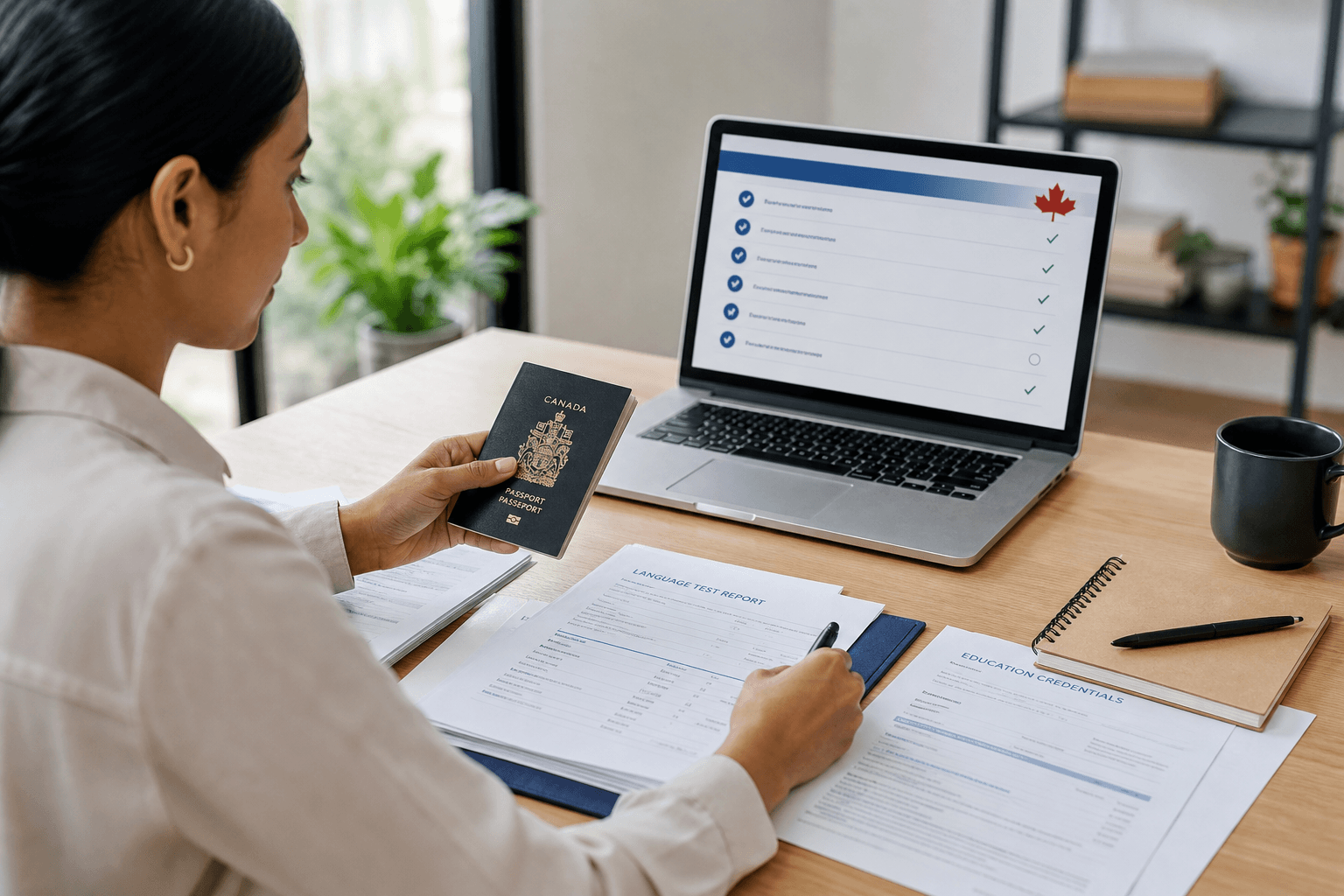
A strong Express Entry profile is accurate, complete, and supported by information you can prove. It can place an eligible candidate in the Express Entry pool, but creating a profile does not guarantee an invitation to apply or permanent residence.
The safest approach is to prepare your records first, enter each answer carefully, and complete a full consistency review before submitting. The checklist below focuses on details that are easy to get wrong and difficult to correct later.
Quick summary

What an Express Entry profile does
Express Entry is an online system used to manage applications from skilled workers. It manages the Canadian Experience Class, the Federal Skilled Worker Program, and the Federal Skilled Trades Program. Each program has its own eligibility requirements.
After you create and submit a profile, IRCC assesses the information provided. If you are eligible, your profile can enter the pool, where you receive a score and rank among other candidates. Higher-ranked candidates may receive an invitation to apply for permanent residence, but entering the pool is not the same as submitting a permanent-residence application. IRCC’s profile instructions explain this sequence.
Think of the profile as a carefully prepared statement of your eligibility and ranking factors, not as an approval. An invitation is a later step with separate requirements and deadlines.
Prepare before you start the profile

Gathering evidence first reduces guesswork and helps you find missing documents, conflicting dates, expired results, or information that needs clarification.
- A valid passport or travel document.
- Language test results and the official report.
- Canadian education records or an educational credential assessment report for foreign education, where applicable.
- Letters and other evidence supporting your work experience.
- Proof of funds, where required.
- Police certificates, when required.
- Provincial nomination information, if applicable.
This is not a universal document list. Requirements depend on the program and your personal history. Use the current Express Entry document guidance to identify what applies to you.
Express Entry profile sections: what to check
| Profile area | What to verify |
|---|---|
| Identity and status | Names, birth details, passport information, marital status, and personal facts match official records. |
| Program eligibility | Work experience, language ability, education, and other facts fit the program requirements. |
| Language | Test type, report number, dates, and individual results match the official report. |
| Education | Credentials, institutions, dates, Canadian education, and assessment details are correct. |
| Work history | Employers, job titles, locations, dates, duties, and work periods match your records. |
| Funds and nominations | Proof-of-funds and provincial nomination information is included only where applicable. |
| Family and background | Family composition, addresses, travel, and background information are complete and consistent. |
1. Confirm the program and eligibility information
Compare your actual work experience, language ability, education, and other facts with the requirements of the programs managed through Express Entry. Do not choose a program simply because it appears most favourable.
IRCC notes that requirements differ between programs, particularly for work experience, language ability, and education. Its Express Entry eligibility information can help you identify which program or programs may apply.
2. Check language tests and education details
Enter language information exactly as it appears on the test report. Check the test name, report details, results for each ability, and relevant dates. Do not estimate a result from memory.
For education, confirm the credential, institution, country, dates, and whether an educational credential assessment is required. Keep the assessment report or Canadian education evidence with your working records.
Language and education can affect eligibility and ranking. The CRS criteria published by IRCC identifies education and official language proficiency among the factors considered, along with other factors.
3. Build a consistent work history
Create a private timeline before completing the profile. For each position, record the employer’s name, location, job title, start and end dates, duties, and supporting evidence.
Compare the timeline with employment letters, contracts, pay records, tax documents, and other records. Look for overlapping jobs, unexplained gaps, different spellings, and dates that do not align. If a job title changed, keep the timeline clear rather than compressing multiple roles into one description.
Do not tailor duties or occupation details merely to appear more favourable. The information should describe what you actually did and remain defensible against your evidence.
4. Review information that affects your CRS profile
The Comprehensive Ranking System considers factors such as age, education, official language proficiency, and Canadian work experience. Your profile should reflect your real circumstances on the relevant date, not an anticipated change that has not yet occurred.
Review job-offer information carefully. If you have a valid job offer or another employment detail relevant to program eligibility, include it where required and ensure the supporting information is accurate. Do not assume that a job offer automatically creates a particular CRS result or guarantees an invitation.
5. Match every important answer to evidence
Beside each important profile answer, note the document or record that supports it. If you cannot identify supporting evidence, mark the answer for review before submitting.
- Identity answers should match passports and civil-status records.
- Language answers should match the official test report.
- Education answers should match transcripts, credentials, Canadian records, or an assessment report.
- Work answers should match employer records and the duties you can explain.
- Funds, nomination, and background answers should match current records and applicable requirements.
This does not mean every document must be uploaded at the profile stage. It means you should avoid entering information that you cannot later substantiate or explain.
Before you submit: the accuracy review
Read the entire profile from the beginning. Check names, dates of birth, addresses, marital and family information, travel history, work periods, job titles, occupation details, education, language results, funds, and nomination information.
- Dates that overlap or leave unexplained gaps.
- Different spellings of an employer, institution, city, or family member’s name.
- Language results copied into the wrong field.
- Education information that does not match the credential or assessment report.
- Work duties that do not reflect the role described in employer evidence.
- Information that has changed since an earlier immigration application.
IRCC’s help guidance says applicants should review their profile before submitting, and the stated update process does not allow changes after submission. Review the current IRCC instructions on updating an Express Entry profile before finalizing your answers.
What happens after you submit
If you are eligible, your submitted profile may enter the Express Entry pool. You receive a score and rank, and IRCC may invite higher-ranked candidates to apply for permanent residence. Submission alone does not guarantee an invitation.
An invitation is not permanent residence. If invited, you must complete a separate application and provide the documents required at that stage.
Verify current IRCC rules before acting
Express Entry requirements, CRS criteria, selection conditions, and document instructions can change. Compare any checklist, calculator, or previous advice with the current official IRCC pages before relying on it.
Consider an assessment or document review if your work history is complex, your education was completed outside Canada, your evidence is unclear, your family information has changed, or you have previously provided inconsistent immigration information. A review cannot guarantee an invitation or approval, but it can help identify issues before submission.
Frequently asked questions
Can I change my Express Entry profile after submitting it?
Do not assume that you can correct information later. IRCC’s stated update process requires review before submission and indicates that changes cannot be made after submission through that process. Check the current instructions for your situation.
Does entering the Express Entry pool guarantee an invitation?
No. An eligible profile can enter the pool, receive a score and rank, and still not receive an invitation. An invitation is a separate decision based on applicable selection conditions.
What documents should I prepare before creating a profile?
Start with your passport or travel document, language test results, education records or an educational credential assessment where applicable, work-experience evidence, and any proof of funds, police certificates, or provincial nomination records that may apply.
What should I do if my profile does not match my documents?
Pause before submitting. Determine whether the discrepancy is a spelling issue, date error, changed circumstance, or matter requiring explanation. Resolve it using reliable records rather than choosing the most advantageous answer.
Should I include job-offer information?
Include it where the applicable instructions require it for your program or profile. Confirm that the details are accurate and supported. A job offer does not automatically guarantee a specific CRS result or invitation.
Conclusion: submit only after the details line up
The most useful Express Entry profile tips are practical: confirm your program, gather evidence first, enter language and education details exactly, build a defensible work timeline, and reconcile every important answer with your records. Then check current IRCC guidance before submitting.
Express Entry preparation is not about making your history look better. It is about presenting your real qualifications clearly and consistently while understanding that pool entry, an invitation, and a permanent-residence application are separate stages.
Simmi Immigration provides Canadian immigration consulting and lists Express Entry among its services. Request a free assessment from Simmi Immigration to discuss your circumstances and next steps. The business states that responses typically arrive within one business day.