
Super Visa
Brampton Invitation Letter for a Super Visa: What Hosts Must Include
Preparing a Brampton invitation letter for a Super Visa? Learn who signs it, what to include, which evidence supports it, and how to check it.
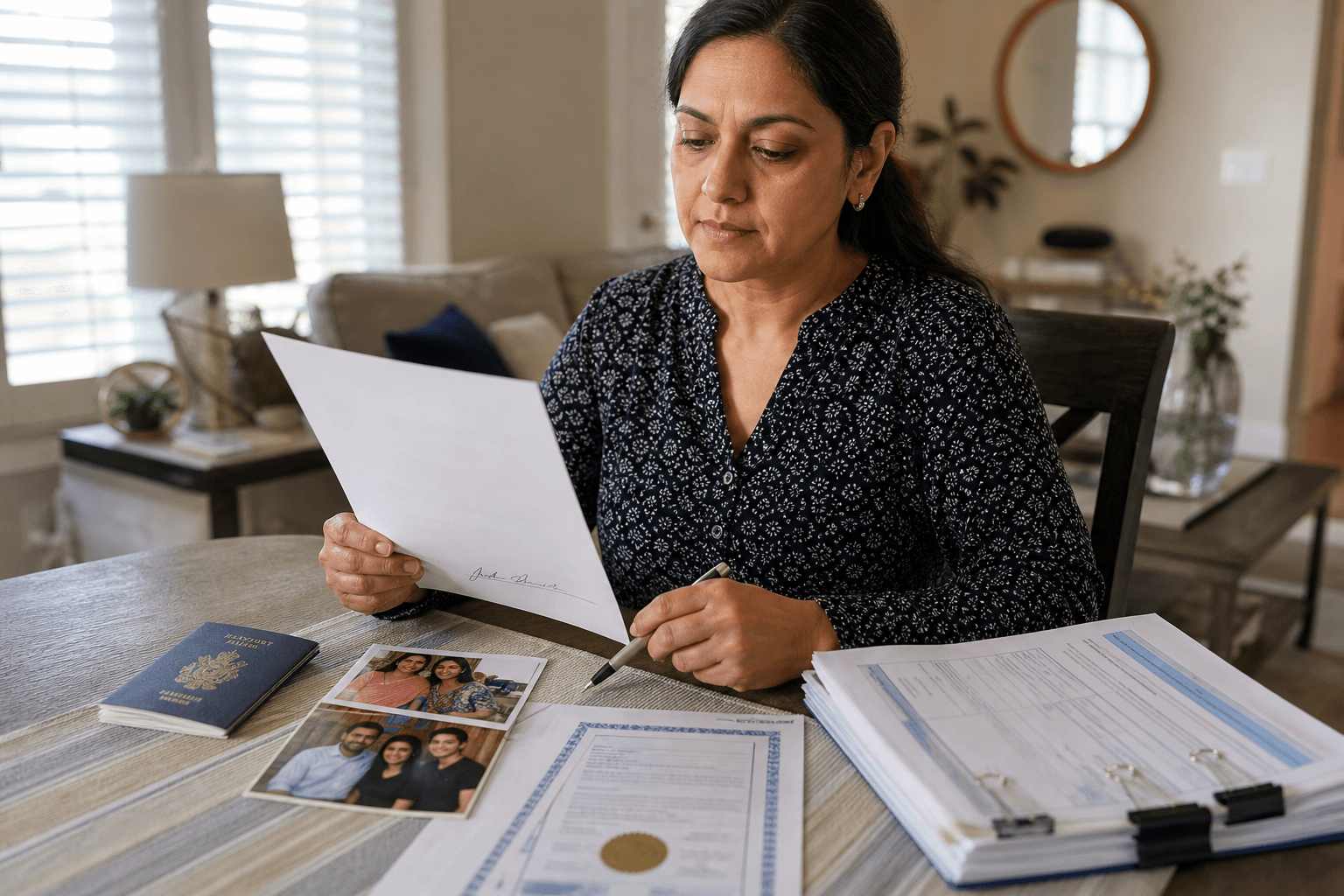
If you are searching for a Brampton invitation letter, the relevant document is not a special Brampton form. For a parent or grandparent applying for a Super Visa, it is the written and signed Super Visa letter of invitation prepared by the eligible child or grandchild in Canada.
The letter should connect clearly to the applicant’s identity, family relationship, host status, family-size calculation, and financial-support evidence. It does not replace the rest of the application or guarantee approval. Its purpose is to present the proposed visit and the host’s commitments consistently with the supporting documents required by IRCC.
Quick summary

- The official term is a Super Visa letter of invitation, not a separate Brampton invitation-letter form.
- The host must generally be the applicant’s child or grandchild and be a Canadian citizen, permanent resident, or person registered as an Indian under the Indian Act.
- The letter must promise financial support for the applicant’s stay and list the people included in the host’s family-size calculation.
- Proof of status, relationship evidence, family composition, and income documents should support the statements in the letter.
- Before submission, compare every name, date, address, signature, family-size count, and financial detail across the entire application.
Who Can Write and Sign a Super Visa Invitation Letter?
The letter should come from the applicant’s child or grandchild who lives in Canada and is inviting the parent or grandparent. The host must generally be a Canadian citizen, permanent resident, or person registered as an Indian under the Indian Act. The host writes and signs the letter, rather than asking the applicant to prepare it as though it were their own invitation.
The letter should identify both parties accurately and explain the relationship. If the applicant is a parent, identify the Canadian host as their child. If the applicant is a grandparent, identify the host as their grandchild. The relationship should also be supported by appropriate civil or identity documents in the wider application.
A spouse or common-law partner may be relevant as a co-signer where the current Super Visa rules allow it. Do not assume that another relative, friend, or household member can take the place of the eligible host. The applicable rules and document checklist should determine whether a co-signer is appropriate for the specific file.
What the Super Visa Letter of Invitation Must Contain

There is no need to force the letter into a rigid template. It should be a clear, dated document that covers the required commitments and gives the officer an accurate overview of the proposed visit. Review these elements:
- Host details: Include the host’s full legal name, Canadian address, contact information, and status in Canada.
- Applicant details: Use the parent or grandparent’s name and date of birth exactly as shown in their passport and application forms.
- Relationship: State whether the applicant is the host’s parent or grandparent and identify the family connection clearly.
- Purpose of the visit: Explain that the host is inviting the parent or grandparent for a temporary visit under the Super Visa program.
- Financial-support promise: State that the host will provide financial support for the applicant for the duration of the authorized stay.
- Family-size information: List the people included in the host’s family-size calculation, not merely the number.
- Visit arrangements: Describe where the applicant is expected to stay and the intended visit period where those details are known and accurate.
- Signature: Date and sign the letter. If a co-signer is applicable, handle the co-signer’s role and signature consistently with current requirements.
Keep the wording factual. An invitation letter should not promise that the application will be approved, guarantee a particular length of stay, or describe financial circumstances that the accompanying documents cannot support.
Connect the Letter to Family Size and Income Evidence
Family size matters because it is used to assess the host’s Minimum Necessary Income, or MNI. The letter should identify every person included in that calculation. This may involve the host’s household and the applicants being invited, so count the household carefully rather than copying a number from an older application.
The financial-support promise should match the evidence submitted for the applicable period. Depending on the host’s circumstances, this may include a Notice of Assessment, T4 slips, an employment letter, and recent pay stubs. IRCC’s host financial-support instructions explain that the invitation must be supported by evidence showing the host can provide financial support for the duration of the visit.
Do not insert an income figure simply because it appeared in a previous year’s guidance. The applicable threshold can depend on current rules and the host’s family size. Calculate the relevant household size using current IRCC instructions, then make sure the letter, income documents, and forms all refer to the same people and period.
Invitation Letter Versus Supporting Evidence
The letter explains the invitation and the host’s commitments. The supporting evidence proves the statements. Keeping those functions separate helps prevent the mistake of making the letter carry information that should instead be documented elsewhere.
| Item | What belongs in the letter | What should support it |
|---|---|---|
| Host identity and status | Full name, address, contact details, and status in Canada | Citizenship, permanent residence, or applicable status document |
| Family relationship | Clear statement that the applicant is the host’s parent or grandparent | Birth, marriage, or other civil records connecting family members |
| Financial support | Promise to provide financial support for the duration of the stay | Relevant income evidence, such as a Notice of Assessment, T4 slips, employment documentation, and pay stubs |
| Family size | Names and details of everyone included in the calculation | Family-composition and status documents supporting the listed household members |
| Applicant details | Exact name, date of birth, and relationship to the host | Passport, application forms, and identity documents |
| Visit arrangements | Purpose, intended timing, and accommodation details where relevant | Documents and explanations consistent with the temporary visit |
Use the current document checklist for the applicant’s situation rather than treating this table as a complete application checklist. IRCC identifies the invitation letter, host family composition, status evidence, and financial-support material as relevant parts of a Super Visa file.
Pre-Submission Consistency Review
Read the invitation letter beside the application forms and every supporting document. A careful final review is often more useful than adding extra paragraphs to the letter.
- Check names and dates: Confirm spelling, order of names, dates of birth, passport details, and relationship terms.
- Check addresses: Make sure the host’s Brampton address and the applicant’s address are current and used consistently where requested.
- Check signatures and dates: Confirm that the required host signature is present, legible, and dated. Review any applicable co-signer signature separately.
- Recalculate family size: Compare the people listed in the letter with the family-composition evidence and income calculation.
- Compare financial wording: Ensure the support promise matches the income evidence and does not claim more than the documents establish.
- Confirm relationship evidence: Make sure the documents connect the applicant to the host as a parent or grandparent.
- Review the visit explanation: The purpose, timing, accommodation details, and forms should not contradict one another.
- Check document quality: Replace unclear scans, organize translations where required, and follow current upload or submission instructions.
The letter is one part of the file. Even accurate support wording and sufficient income evidence do not guarantee approval, because the application is assessed as a whole.
Common Problems That Weaken an Invitation Letter
- Missing signature: An unsigned draft is not a completed invitation letter.
- Vague financial commitment: Saying only that the applicant will be “looked after” may not clearly communicate the required promise of financial support.
- Incomplete family-size information: Listing only the host and applicant can be misleading if other people must be included in the calculation.
- Unsupported relationship: A statement about being a parent or grandparent should align with civil records and identity documents.
- Conflicting personal information: Different spellings, addresses, dates, or household numbers can create avoidable concerns.
- Using the letter as the whole application: The letter cannot replace status documents, income evidence, relationship proof, forms, or other required material.
If there has already been a refusal, do not simply reuse the same letter with a new date. First identify the concerns in the decision and determine whether the wider evidence, financial explanation, family circumstances, or temporary-visit explanation needs to change.
When Professional Super Visa Preparation May Help
Structured support may be useful when the host is unsure who belongs in the family-size calculation, has several income sources, cannot reconcile older and current documents, or is uncertain how a spouse or common-law partner may participate. It can also help when the applicant’s insurance, medical-exam logistics, document organization, or previous refusal makes the file more complex.
Simmi Immigration provides Super Visa guidance that includes invitation-letter preparation, income-document review, insurance compliance guidance, document checklists, application assembly and submission support, and refusal reapplication strategies. The goal is to help organize the evidence and identify inconsistencies before submission.
Frequently Asked Questions
Does a Brampton host need a special local invitation-letter form?
No. Brampton does not create a separate Super Visa invitation-letter form or local immigration process. The relevant document is the written and signed letter of invitation required for the Super Visa application.
Does the Super Visa invitation letter need to be notarized?
The IRCC requirements reviewed for this guide identify a written and signed invitation letter, along with supporting evidence. They do not establish notarization as a general requirement. Follow the current checklist and any specific instruction issued for the application.
Can a spouse or common-law partner co-sign the invitation letter?
An eligible spouse or common-law partner may be involved as a co-signer where current rules allow it and where their income or support is relevant. The host remains responsible for ensuring that the letter, family-size calculation, signatures, and supporting evidence accurately reflect the arrangement.
What should a host do if the invitation letter and income documents contain different information?
Pause before submitting the application. Determine which information is current and accurate, correct the letter or supporting documents as appropriate, and ensure the family-size calculation, income period, forms, and evidence tell the same story. If the difference relates to a previous refusal or complicated household, obtain a file-specific review.
Prepare the Letter as Part of One Consistent File
A Brampton host should treat the Super Visa letter of invitation as the coordinating explanation for the visit, not as a standalone approval document. Confirm the host’s eligibility, identify every person in the family-size calculation, state the financial-support commitment clearly, and attach evidence supporting each important statement.
Before sending the file, review the letter against the current IRCC checklist and the applicant’s forms. Keep the host’s address, relationship details, signatures, income period, household members, and visit explanation consistent.
Simmi Immigration offers a free assessment and Super Visa support for invitation letters, income documentation, insurance guidance, application preparation, and refusal reapplication strategy. Visit Simmi Immigration to request an assessment for your family’s circumstances.